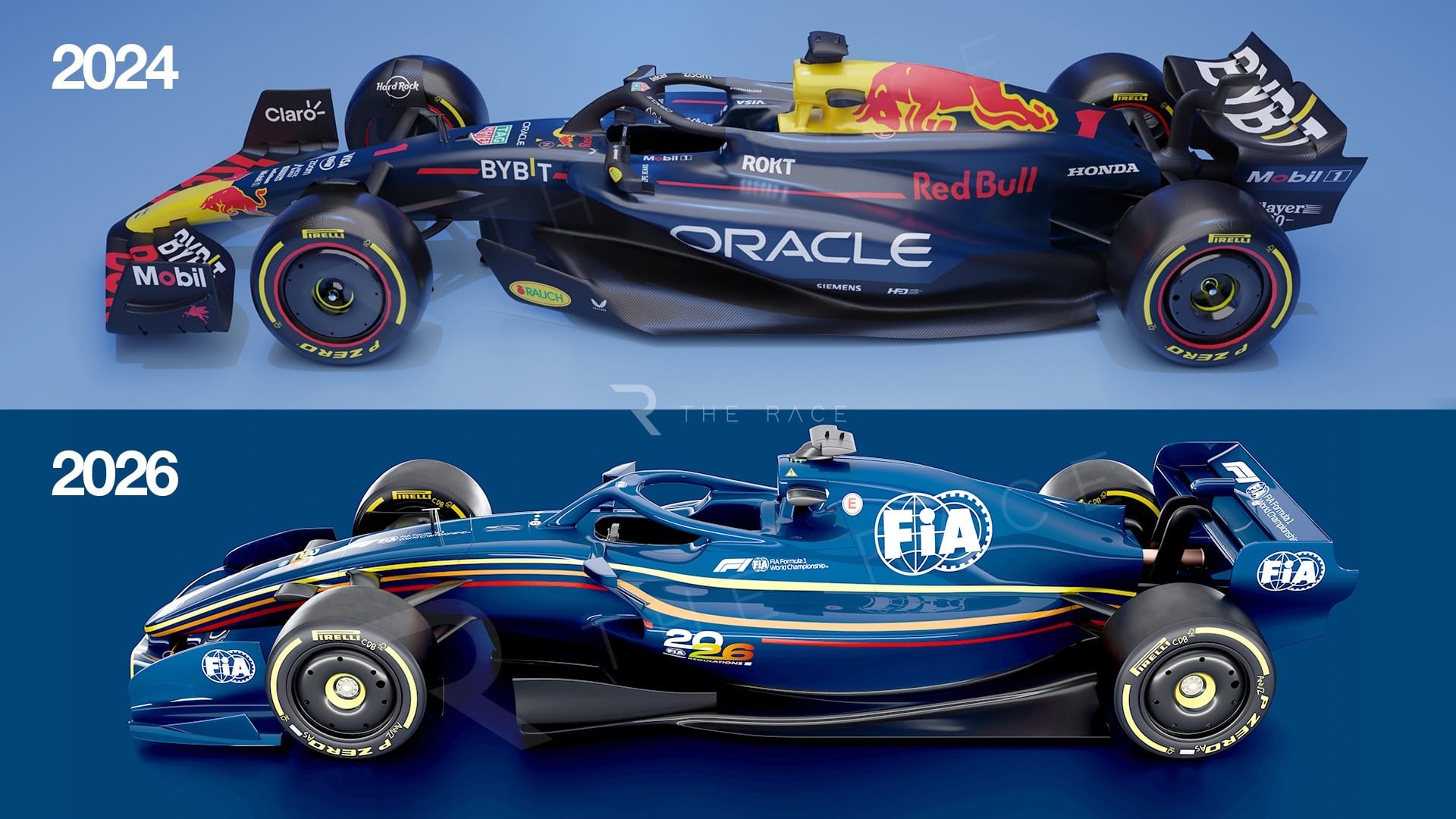
The 2026 F1 car compared to the 2024 car.
The 2026 F1 car compared to the 2024 car.
Hello everyone, my name is Payton Baldridge and today we are going to dive into the controversial 2026 F1 Regulations and why some people believe that F1 is taking a step backward instead of forward.
The 2026 Formula 1 regulations introduce a completely new direction for the sport, with the FIA aiming to create cars that are lighter, more agile, and more sustainable. These new cars will feature a redesigned hybrid power unit, a major reduction in downforce, and the introduction of active aerodynamics that adjust depending on whether the car is cornering or running down a straight. The FIA describes this rule set as a way to modernize F1 while keeping the racing exciting and competitive.
This marks a major shift from the 2022-2025 generation of cars, which were built around ground-effect aerodynamics. Those cars relied heavily on the floor to generate downforce, making them extremely stable at high speeds but also very heavy and sensitive to bumps. The 2026 cars, by contrast, are smaller and significantly lighter, with much less natural downforce. Instead of depending on the floor, they rely more on adjustable wings and hybrid power deployment to manage performance.
The driving experience will change dramatically. The 2022-2025 cars were known for being planted and predictable in fast corners thanks to their strong ground-effect grip. The 2026 cars have reduced downforce and a 50/50 electric-to-ICE power split, meaning drivers need to manage energy recovery and aero modes more actively. With less drag and more electric power, the cars are quicker on straights but trickier to control in technical sections. This contrast is one of the biggest unknowns heading into 2026 and beyond.
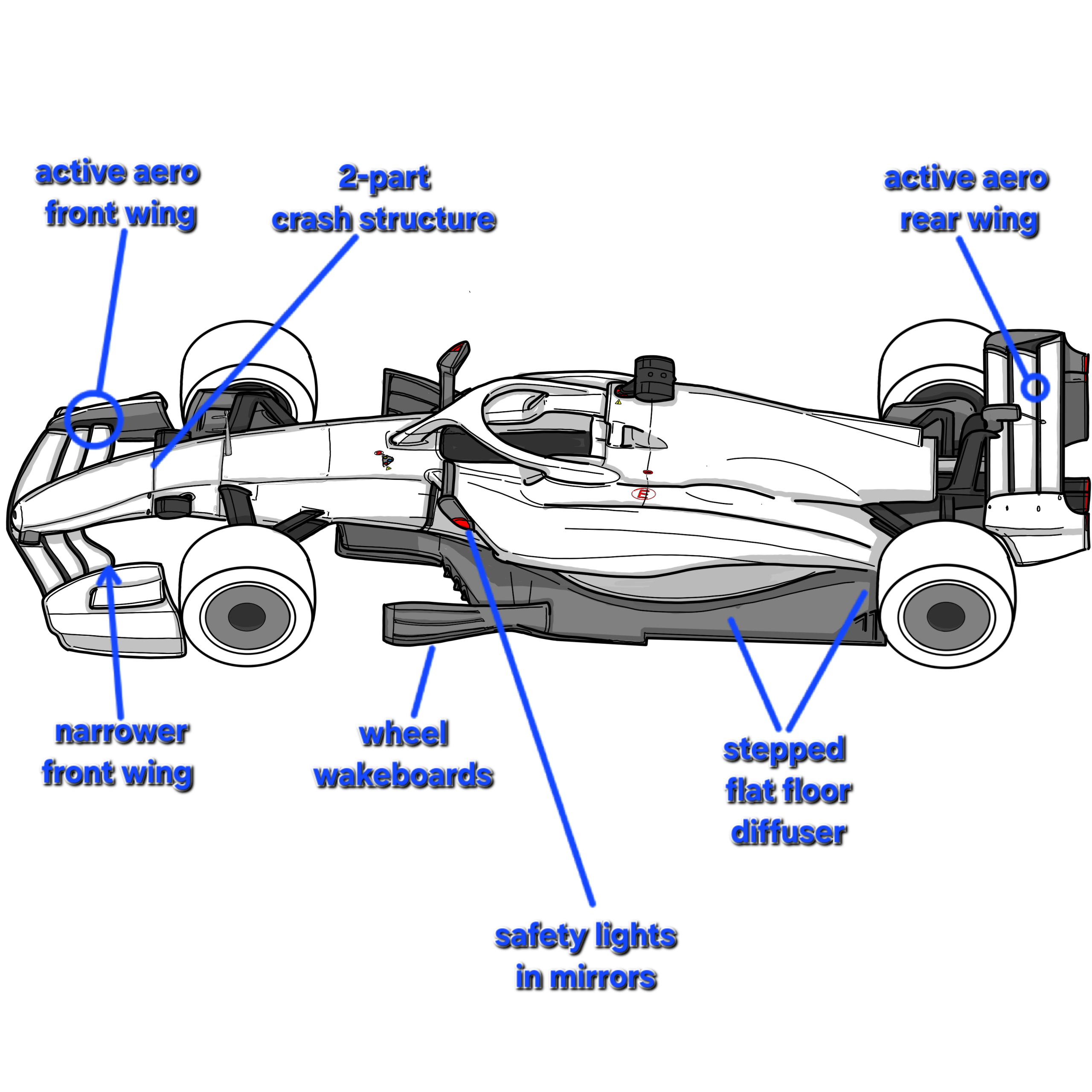
A breakdown of the major aerodynamic and safety changes in 2026.
The diagram above highlights many of the most important changes in 2026, including the active aero front and rear wings, the narrower front wing, the stepped flat-floor diffuser, and the new safety-focused crash structures. These features represent the FIA's push toward cars that are lighter, more efficient, and more adaptable on track. Combined with the updated hybrid power unit, fully sustainable fuels, and reduced downforce, these design elements show just how different the 2026 cars are from the past generation. Altogether, these updates reflect the FIA's goal of creating closer racing, improving sustainability, and opening the door for more manufacturers to join the sport.
However, these dramatic changes have sparked a lot of debate among fans, teams, and drivers. Some believe the new rules improve racing, while others worry the cars are too unstable, underpowered, or dependent on electric deployment. The shift away from ground-effect and the introduction of active aero have raised questions about how the cars have behaved on track. These concerns form the core of the controversy surrounding the 2026 regulations and that's what the next page of my site explores.